Introduction
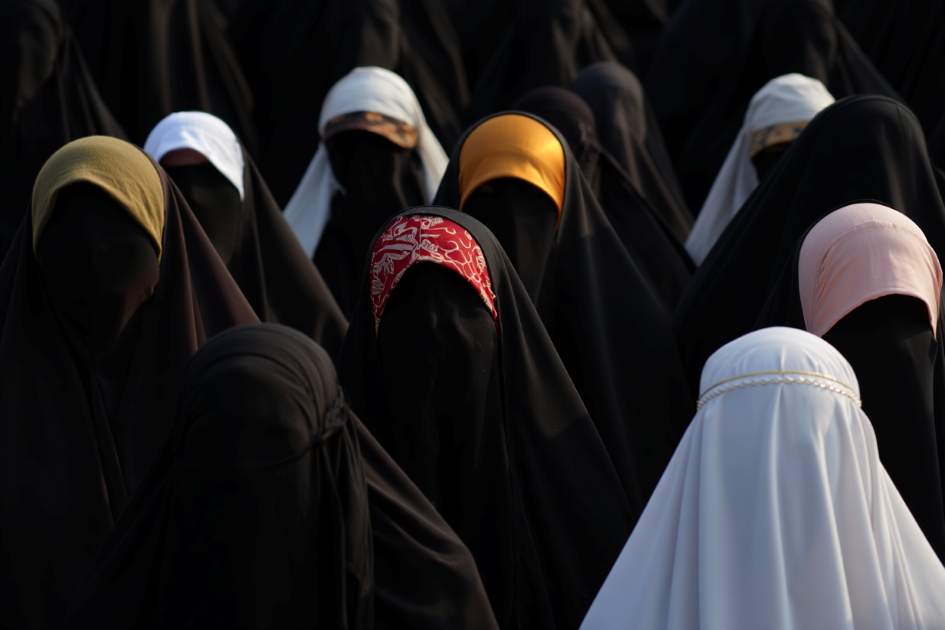
Islamic Shariah guides women to observe the Hijab (veil), and its purpose is well-defined. Islam, in perfect alignment with human nature, teaches that the relationship between men and women should be based on purity, cleanliness, and responsibility. And no disruption should be allowed in this system. Therefore, Islam has placed a complete restriction on adultery and everything that leads to it, because it is a selfish way of satisfying desires without any sense of purity or responsibility. It is a source of both physical and spiritual harm.
The Qur’an instructs both men and women to lower their gazes and guard their chastity (Surah An-Nur). Women are told to draw their cloaks over their bodies (Surah Al-Ahzab).
The Islamic dress code for women
It must fully cover the entire body (awrah).
It should not be transparent enough to expose the skin or body.
It should not be so tight (form-fitted) that it reveals the shape or contours of the body.
It must be feminine and not similar to men’s dress.
Levels of veil (Hijab)
In Islam, there are different levels of veils (hijab or modesty). The highest level is when a woman covers herself so completely that even her cloak (outer garment) does not attract the gaze of non-mahram (unrelated men). Some Sahabiyat were known for such modesty that no non-mahram had ever seen them. These Sahabiyat were known as “mukhaddarat,” i.e., women who lived in full modesty and stayed away from public exposure. However, this level of hijab is only feasible for women who have no interaction with men in society.
For example, Hazrat Aishah Siddiqah (RA), the wife of the Prophet Muhammad (PBUH), used to teach Islamic rulings. While she spoke from behind a veil, she did not conceal her voice because it was necessary for educational purposes. On the other hand, there were some Sahabiyat who would even avoid letting their voices be heard by non-mahrams. So, if someone adopts this highest form of modesty and it doesn’t hinder their duties, it’s commendable — but not obligatory.
Is covering the face obligatory in Islam- A Scholarly Perspective
The obligatory level of hijab is that a woman must cover her entire body except for the face, hands, and feet in front of a non-mahram. Except for face, hands, and feet, all other body parts, including hair, arms, shoulders, and legs, are considered ‘awrah (the private area that must be covered), and exposing them in front of unrelated men is strictly prohibited. Scholars are unanimously agreed on this matter without any difference of opinion.
Now, regarding the face and hands, scholars differ. Some scholars hold the view that the face and hands are not part of the ‘awrah, and therefore, do not need to be covered in all situations. However, they acknowledged that if there is a risk of fitnah (temptation), then covering the face becomes necessary.
For example, men are required to cover the area from the navel to the knees during prayer and in public. Exposing this region is prohibited regardless of whether it leads to temptation or not. Similarly, for women, the area other than the face, hands, and feet must always be covered in front of non-mahrams, whether or not there is a fear of temptation.
As for older women, Islam offers them some leniency in hijab once they are past the age of desirability. However, the standard for “young” in Islamic terms isn’t merely based on age, but also on appearance and attraction. A woman remains “young” as long as she holds any physical attraction, even if she is 50 or older.
Many people confuse two things: ‘awrah (what must be covered absolutely, even during prayer) and hijab (what should be covered due to modesty or to prevent fitnah). During prayers, a woman can leave her face uncovered. But this doesn’t mean she can expose it in public where temptation is a real concern.
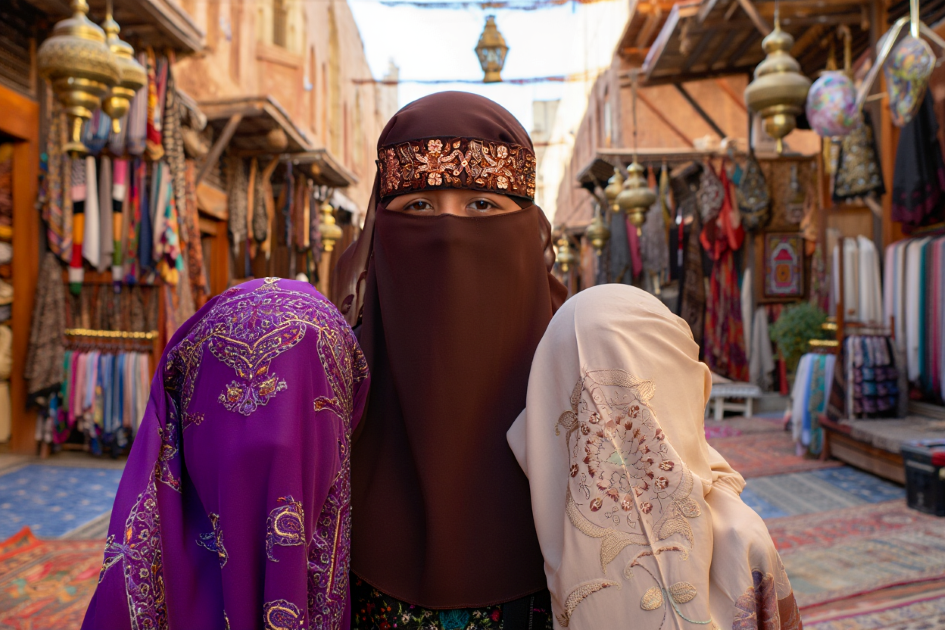
Some scholars consider the face part of the ‘awrah as well, and say it must be covered at all times in front of non-mahrams. Yet, contemporary scholars advise women to cover their faces in public due to the high risk of temptation.
Let’s be honest: the face is the center of attraction. When people glance lustfully, they first look at the face. That’s where the temptation starts. If the face is concealed, it reduces the chances of inappropriate desires or actions.
That said, it’s important to be practical. Many women today, such as those in offices, business, or public roles, are not used to wearing the hijab. Expecting them to adopt full veils, gloves, and head-to-toe coverage instantly might be unrealistic.
So the advice for them is: start somewhere. If they can’t immediately wear a niqab or full cloak, at least they should begin by covering their body properly, even if the face remains exposed. Something is better than nothing. Over time, with Allah’s guidance, they might gradually embrace the fuller form of hijab.
Conclusion
In conclusion, while the highest level of hijab is commendable and rewarded, it is not compulsory in Islam. The minimum obligatory hijab (veil) is that the body (excluding face, hands, and feet) must be covered in front of a non-mahram. The face should also be covered when there is a risk of temptation, which is often the case in today’s societies. And for those who are far from these practices, any step towards modesty is a step worth appreciating.
You may also like to read: Islamic Accountability: Duties to Allah and Responsibilities to Humanity